Electronic commerce, commonly known as e-commerce, has transformed the way people buy, sell, and exchange goods and services across the globe. What started as a niche experiment in the early 1990s has exploded into a trillion-dollar industry that touches virtually every sector of the economy. Whether you are a budding entrepreneur launching an online store, a small business owner exploring digital channels, or a marketing professional studying the latest trends in electronic retail, understanding the mechanics and strategies behind e-commerce is essential. This comprehensive guide dives deep into what e-commerce really means, the different business models it encompasses, the platforms that power online stores, actionable best practices, and where the industry is heading next. By the end of this article, you will have a clear, practical roadmap to navigate the dynamic world of digital commerce with confidence.
What Is E-Commerce and Why Does It Matter?
At its core, e-commerce refers to any commercial transaction that involves the transfer of information, funds, or goods over the internet. Unlike traditional brick-and-mortar retail, electronic commerce removes geographical barriers, allowing businesses to reach customers 24 hours a day, seven days a week. The global e-commerce market surpassed $5.7 trillion in 2022 and continues to grow at a staggering compound annual growth rate. Understanding this ecosystem means more than knowing how to set up an online checkout page — it involves grasping consumer behavior, supply chain logistics, digital payment ecosystems, and data-driven marketing strategies that fuel sustainable online businesses.
The importance of e-commerce extends beyond convenience. It democratizes access to markets, enabling small and medium-sized enterprises to compete with multinational corporations. A handmade jewelry seller in a rural town can now ship products worldwide, while a startup in a developing nation can access customers on every continent. This shift has fundamentally altered retail economics and created entirely new career paths, from dropshipping specialists to e-commerce growth hackers.
Types of E-Commerce Models
Not all online transactions look the same. The e-commerce landscape is divided into several distinct models based on the relationship between buyers and sellers. Each model carries unique operational requirements, marketing strategies, and revenue potential.
Business-to-Consumer (B2C)
Business-to-consumer e-commerce is the most familiar model for everyday shoppers. When you purchase shoes from Nike’s website or order groceries through an app, you are participating in B2C electronic commerce. This model focuses heavily on branding, user experience, and emotional purchasing triggers. Successful B2C businesses invest heavily in social media advertising, search engine optimization, and personalized email campaigns to convert browsing visitors into paying customers.
Business-to-Business (B2B)
B2B e-commerce involves transactions between businesses rather than individual consumers. Think of a manufacturer purchasing raw materials from a supplier through an online portal or a company subscribing to cloud-based software. The B2B electronic commerce space tends to involve larger order volumes, longer sales cycles, and relationship-driven decision-making. Platforms like Alibaba and ThomasNet connect thousands of B2B buyers with verified suppliers worldwide.
Consumer-to-Consumer (C2C)
Consumer-to-consumer platforms empower individuals to sell directly to other individuals. Marketplaces such as eBay, Etsy, and Facebook Marketplace exemplify this model. C2C e-commerce thrives on trust mechanisms like seller ratings, buyer protection policies, and secure payment processing. Entrepreneurs often use C2C channels to test product ideas before investing in dedicated inventory or building their own standalone storefronts.
Consumer-to-Business (C2B)
The consumer-to-business model flips the traditional dynamic, with individuals offering products, services, or content to companies. Freelancers bidding on projects through platforms like Upwork or influencers monetizing their audience through brand partnerships are prime examples of C2B electronic commerce. This model has grown significantly with the rise of the creator economy and the gig workforce.
How E-Commerce Works: A Step-by-Step Breakdown
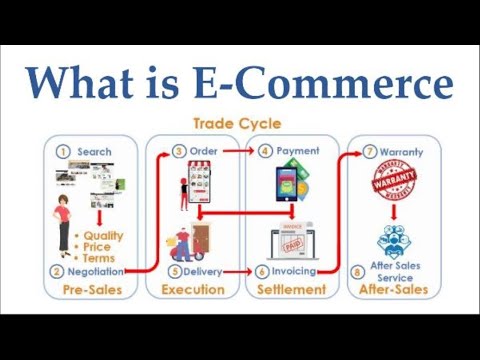
Understanding the technical and operational flow of an online transaction helps business owners identify opportunities for optimization at every stage. Here is how a typical e-commerce transaction unfolds.
- Customer Discovery: A shopper finds a product through search engines, social media, paid advertisements, or direct traffic.
- Product Selection: The customer browses the catalog, views product descriptions, images, and reviews before adding items to the digital cart.
- Checkout Process: The shopper enters shipping details, selects a delivery method, and chooses a payment option such as credit card, digital wallet, or buy-now-pay-later service.
- Payment Authorization: A payment gateway processes the transaction securely, communicating between the customer’s bank and the merchant’s account.
- Order Fulfillment: The merchant picks, packs, and ships the order. Many businesses now integrate real-time inventory management and automated fulfillment systems.
- Delivery and Post-Purchase Support: The customer receives the product, and the business follows up with order tracking, feedback requests, and return management.
Each of these stages presents a potential friction point. Optimizing page load speed, simplifying checkout forms, offering multiple payment methods, and providing transparent shipping updates are all proven ways to reduce cart abandonment rates and improve overall conversion performance.
Key E-Commerce Platforms Compared
Choosing the right platform is one of the most critical decisions an online seller will make. Each platform offers different strengths in terms of customization, scalability, pricing, and ease of use. The table below compares several leading e-commerce solutions to help you make an informed choice.
| Platform | Best For | Starting Price | Key Strength |
| Shopify | Small to mid-sized online stores | $39/month | Ease of use and app ecosystem |
| WooCommerce | WordPress users wanting flexibility | Free (hosting costs apply) | Full customization and open-source control |
| BigCommerce | Growing brands needing scalability | $29.95/month | Built-in features without transaction fees |
| Magento (Adobe Commerce) | Large enterprises with complex needs | Custom pricing | Enterprise-grade customization and performance |
| Squarespace | Creatives and content-rich stores | $33/month | Beautiful templates and integrated publishing |
Your decision should factor in your technical expertise, budget, expected transaction volume, and long-term growth goals. Many successful merchants start on a simpler platform and migrate to more powerful systems as their operations expand.
E-Commerce Best Practices for Sustainable Growth
Launching an online store is only the beginning. Building a profitable, long-lasting digital business requires disciplined execution across multiple fronts. Here are expert-level recommendations that separate thriving e-commerce brands from struggling ones.
- Prioritize mobile-first design: Over 60% of online shoppers use mobile devices to browse and purchase. Your store must deliver a seamless experience on smartphones and tablets, with fast-loading pages and intuitive navigation.
- Invest in high-quality product photography: Visual content drives purchasing decisions. Use multiple angles, zoom functionality, and lifestyle imagery that helps customers imagine the product in real use.
- Leverage email marketing automation: Segmented email campaigns for abandoned carts, welcome sequences, and post-purchase follow-ups consistently generate higher revenue than generic bulk blasts.
- Implement robust search engine optimization: Optimize product pages for long-tail keywords, build quality backlinks, and maintain a fast, secure website to improve organic search visibility.
- Offer transparent pricing and shipping: Hidden fees are the number one reason shoppers abandon their carts. Display all costs upfront to build trust and reduce friction.
- Collect and act on customer feedback: Reviews, surveys, and customer support interactions provide invaluable data that can guide product development, inventory decisions, and service improvements.
Future Trends Shaping Electronic Commerce
The e-commerce industry is evolving rapidly, driven by technological innovation and shifting consumer expectations. Artificial intelligence and machine learning are powering hyper-personalized product recommendations, dynamic pricing strategies, and chatbot-driven customer support. Voice commerce is gaining traction as smart speakers and voice assistants become household staples, meaning consumers increasingly search for products using spoken queries rather than typed text.
Social commerce is another transformative trend, blending shopping directly into platforms like Instagram, TikTok, and Pinterest. Live-stream shopping events, where influencers showcase products in real time and viewers purchase instantly, are reshaping how brands engage digital audiences. Additionally, sustainable e-commerce practices — including eco-friendly packaging, carbon-neutral shipping options, and transparent supply chains — are becoming key differentiators that influence purchasing decisions among environmentally conscious consumers.
Augmented reality is also making waves, allowing customers to virtually place furniture in their living rooms or try on clothing digitally before committing to a purchase. These immersive technologies reduce uncertainty and bridge the gap between online and in-store shopping experiences.

Frequently Asked Questions About E-Commerce
1. What are the essential steps to start an e-commerce business from scratch?
Starting an online store involves several foundational steps: selecting a profitable niche, conducting market research, choosing a reliable e-commerce platform, sourcing products or creating a digital offering, setting up payment processing, building a mobile-friendly website, and launching targeted marketing campaigns. Beginners should focus on validating their product idea before committing significant capital, using pre-orders or small test batches to gauge demand and refine their value proposition.
2. Which e-commerce business model generates the highest profit margins?
Digital products and subscription-based services typically offer the highest profit margins in electronic commerce because they eliminate physical inventory costs and shipping logistics. Online courses, software-as-a-service platforms, and membership communities are examples of high-margin digital commerce models. However, profitability ultimately depends on pricing strategy, customer acquisition costs, and operational efficiency regardless of the product type.
3. How can I reduce cart abandonment rates on my online store?
Cart abandonment is a persistent challenge in e-commerce, with average rates hovering around 70%. Effective reduction strategies include simplifying the checkout process to fewer steps, offering guest checkout options, displaying trust badges and security certifications, providing multiple payment methods including digital wallets and buy-now-pay-later services, and sending automated abandoned cart recovery emails with personalized incentives within the first few hours after abandonment.
4. Is dropshipping a viable e-commerce strategy for long-term success?
Dropshipping can serve as an effective entry point into electronic commerce with minimal upfront investment, but long-term success requires moving beyond the basics. Successful dropshippers differentiate themselves through curated product selection, branded packaging, exceptional customer service, and strong supplier relationships. Relying solely on generic products and competing purely on price leads to thin margins and unsustainable growth in the crowded digital marketplace.
5. What role does search engine optimization play in driving e-commerce revenue?
SEO is arguably the most cost-effective long-term marketing channel for online stores. Optimizing product pages with targeted keywords, building descriptive title tags and meta descriptions, earning backlinks through valuable content, and maintaining excellent site speed all contribute to higher organic traffic. Unlike paid advertising, well-executed search engine optimization generates compounding returns, driving consistent, targeted visitors to your online store without ongoing ad spend.
Conclusion
E-commerce represents far more than just selling products online — it is a complete ecosystem of technology, strategy, and customer relationships that continues to redefine global commerce. From choosing the right business model and platform to implementing proven growth tactics and staying ahead of emerging trends, success in digital retail demands both strategic thinking and consistent execution. Whether you are taking your first steps into online selling or scaling an established brand, the principles outlined in this guide provide a solid foundation for building a profitable and resilient electronic commerce business. The digital marketplace rewards those who stay curious, adapt to change, and prioritize genuine value for their customers above all else.