When you ask e commerce definition, the simplest answer is that it refers to the buying and selling of goods and services over the internet, along with the transfer of money and data needed to complete those transactions. But that barely scratches the surface. Electronic commerce has fundamentally reshaped how businesses operate, how consumers shop, and how the global economy functions. From a teenager selling handmade jewelry on Etsy to multinational corporations managing billions in annual online revenue, the scope of ecommerce is vast and continuously expanding. Understanding the e-commerce definition thoroughly means exploring not just what it is, but how it works, the models it encompasses, the technologies that power it, and why it has become the backbone of modern retail. This guide breaks down everything you need to know, whether you are a curious beginner or a business owner looking to deepen your expertise.
What Is E-Commerce? The Complete Definition
The full e-commerce definition encompasses all commercial transactions conducted electronically. The term electronic commerce was coined to describe any business interaction—whether between businesses, businesses and consumers, or even government entities—that takes place through digital channels. At its core, ecommerce relies on technologies like mobile commerce, electronic funds transfer, supply chain management, internet marketing, online transaction processing, and automated data collection systems. What makes ecommerce distinct from traditional commerce is the removal of physical barriers. There is no need for a brick-and-mortar storefront, no geographical limitation on customer reach, and no strict opening hours. A well-designed ecommerce platform can process thousands of transactions per minute, serving customers across every time zone on the planet.
The definition of e-commerce has evolved significantly since the term first entered mainstream vocabulary in the 1990s. Early ecommerce was limited to purchasing books or CDs through websites like Amazon and eBay. Today, it includes everything from grocery delivery and subscription boxes to digital software downloads, online courses, and even virtual real estate in the metaverse. The breadth of what qualifies as electronic commerce continues to grow alongside technological innovation.
The Evolution and History of E-Commerce
Understanding the e-commerce definition is incomplete without a brief look at how it developed. Electronic commerce did not emerge overnight. It evolved through several distinct phases:
- Pre-Internet Era (1960s–1980s): Electronic data interchange (EDI) and electronic funds transfer (EFT) laid the groundwork. Businesses exchanged documents and transferred funds electronically without human intervention.
- Early Internet Era (1990s): The World Wide Web opened the door for consumer-facing ecommerce. Amazon launched in 1994 as an online bookstore, and eBay followed shortly after, creating the first major online marketplace.
- Dot-Com Boom and Bust (1997–2001): Thousands of online retailers emerged, many of which failed. But survivors like Amazon and PayPal proved that ecommerce was a viable, long-term business model.
- Mobile Commerce Era (2010s): Smartphones transformed how people shop online. Mobile commerce, or m-commerce, became a dominant channel, and social media platforms integrated shopping features directly into their apps.
- Modern E-Commerce (2020s): The COVID-19 pandemic accelerated digital adoption by years. Social commerce, voice commerce, and AI-driven personalization now define the cutting edge of online retail.
Types of E-Commerce Models
Not all ecommerce transactions look the same. The e-commerce definition covers several distinct business models, each serving different market dynamics:
Business-to-Consumer (B2C)
This is the most familiar model, where a business sells products or services directly to individual consumers. Think Amazon, Zappos, or any online store you have ever shopped at. B2C ecommerce relies heavily on marketing, user experience design, and customer trust.
Business-to-Business (B2B)
In B2B ecommerce, one business sells to another. This includes wholesale distributors, manufacturers selling to retailers, and software companies licensing products to other businesses. B2B transactions typically involve larger order volumes, longer sales cycles, and more complex pricing structures.
Consumer-to-Consumer (C2C)
Platforms like eBay, Etsy, and Facebook Marketplace enable individual consumers to sell directly to other consumers. Peer-to-peer ecommerce has exploded in popularity, especially for handmade goods, vintage items, and second-hand products.
Consumer-to-Business (C2B)
This model flips the traditional script, where individuals offer products or services to businesses. Freelance platforms like Upwork and Fiverr are prime examples of consumer-to-business electronic commerce.
Business-to-Government (B2G)
Government agencies use electronic commerce systems to procure goods and services from businesses. This model is growing as public sector digitalization accelerates.
Key Components of an E-Commerce Ecosystem
A successful ecommerce business depends on several interconnected components working seamlessly together:
- E-Commerce Platform: Software like Shopify, WooCommerce, Magento, or BigCommerce that powers the online store, manages inventory, and processes orders.
- Payment Gateway: Services like Stripe, PayPal, or Square that securely process financial transactions between buyers and sellers.
- Shopping Cart Software: Enables customers to select, modify, and review products before checkout.
- SSL Certificates and Security Protocols: Encrypt customer data and build trust through HTTPS and PCI-DSS compliance.
- Inventory Management System: Tracks stock levels, automates reordering, and prevents overselling.
- Customer Relationship Management (CRM): Stores customer data, purchase history, and preferences to personalize the shopping experience.
- Shipping and Fulfillment Infrastructure: Handles order packing, carrier integration, tracking, and returns management.
E-Commerce vs. Traditional Commerce: A Comparison
Understanding how electronic commerce differs from conventional retail helps clarify its unique value proposition:

| Feature | E-Commerce | Traditional Commerce |
| Operating Hours | 24/7, automated | Limited to business hours |
| Geographic Reach | Global, borderless | Local or regional |
| Startup Costs | Lower, scalable | Higher, fixed overhead |
| Customer Interaction | Digital, self-service | In-person, face-to-face |
| Inventory Management | Automated, real-time | Manual or semi-automated |
| Payment Methods | Digital wallets, cards, buy-now-pay-later | Cash, card, check |
The table above illustrates why so many entrepreneurs are migrating toward online retail. The scalability and reach of electronic commerce simply cannot be matched by a physical storefront alone.
Why Understanding E-Commerce Matters in 2024
Global e-commerce sales surpassed $6.3 trillion in 2024 and are projected to exceed $8 trillion by 2027. Whether you run a small side hustle or lead a Fortune 500 company, understanding the e-commerce definition and its practical implications is no longer optional—it is essential. The digital economy rewards businesses that adapt quickly, leverage data, and deliver seamless customer experiences. Mobile commerce now accounts for over 60% of all online transactions, and social media platforms have become powerful digital storefronts where discovery and purchasing happen in a single session.
For businesses, mastering ecommerce fundamentals means more than just setting up a website. It means understanding conversion rate optimization, search engine visibility, customer retention strategies, and the role of artificial intelligence in personalizing the shopping journey. For consumers, understanding electronic commerce helps you shop smarter, recognize secure websites, and take advantage of the best deals available online.
Expert Tips for Building a Successful E-Commerce Business
If you are ready to launch or grow your online store, here are actionable recommendations from seasoned professionals:
- Start with a niche. Broad marketplaces are dominated by giants. Find a specific audience and serve them exceptionally well.
- Invest in mobile-first design. The majority of your customers will browse and buy from their phones. Your store must load fast and look flawless on small screens.
- Prioritize page speed and SEO. Google’s Core Web Vitals directly impact your rankings. A slow ecommerce site loses customers and traffic simultaneously.
- Use data analytics relentlessly. Track customer behavior, cart abandonment rates, and lifetime value to make informed decisions.
- Build trust through transparency. Display clear return policies, genuine reviews, and secure payment badges prominently.
- Diversify your sales channels. Sell on your own site, on Amazon, on social media, and through marketplaces to maximize reach.
Frequently Asked Questions
What does e-commerce mean in simple terms?
E-commerce, short for electronic commerce, means buying and selling products or services over the internet. It encompasses the entire process from browsing and selecting items to making payment and receiving delivery digitally.
What are the four main types of e-commerce models?
The four primary e-commerce models are Business-to-Consumer (B2C), Business-to-Business (B2B), Consumer-to-Consumer (C2C), and Consumer-to-Business (C2B). Each model describes a different relationship between the parties involved in the online transaction.
How is e-commerce different from e-business?
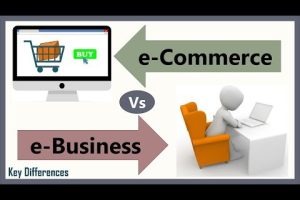
While the e-commerce definition focuses specifically on buying and selling transactions, e-business is a broader term that includes all business processes conducted online, such as supply chain management, customer service, and internal operations. E-commerce is a subset of e-business.
What are the essential tools needed to start an e-commerce business?
You need a reliable ecommerce platform like Shopify or WooCommerce, a secure payment gateway, an SSL certificate for website security, inventory management software, and a digital marketing strategy. Many entrepreneurs also use CRM tools and email marketing platforms to nurture customer relationships.
Is e-commerce only for selling physical products?
No. The electronic commerce definition extends to digital products like ebooks, software, online courses, streaming subscriptions, and even services like consulting or freelance work. Digital products often have higher profit margins because there is no physical inventory or shipping involved.
Final Thoughts
The e-commerce definition may seem straightforward on the surface, but beneath it lies a dynamic, rapidly evolving ecosystem that touches nearly every industry on Earth. From the foundational technologies that enable digital transactions to the sophisticated AI tools that personalize every shopping experience, electronic commerce represents one of the most significant economic shifts in human history. Whether you are a consumer navigating online stores, a small business owner building your first website, or an enterprise scaling globally, a deep understanding of ecommerce is your greatest competitive advantage. The future of retail is digital, and those who embrace the full breadth of electronic commerce will be the ones who thrive in the years ahead.