


Starting or scaling a business means juggling countless responsibilities, and managing your finances efficiently is at the top of that list. Applying for a business checking account online has transformed from a modern convenience into a near-necessity for entrepreneurs, freelancers, and growing companies alike. Whether you are a sole proprietor launching your first venture or a seasoned small business owner looking to streamline operations, the digital application process eliminates the hassle of visiting a physical branch, filling out stacks of paperwork, and waiting days or even weeks for approval. In this comprehensive guide, we will walk you through everything you need to know about how to apply for a business checking account online, from understanding the key features that matter to navigating the documentation requirements and choosing the right financial institution for your unique needs.
Why You Should Apply for a Business Checking Account Online
The shift toward digital banking solutions has accelerated dramatically in recent years, and for good reason. When you apply for a business checking account online, you gain access to a streamlined experience that traditional brick-and-mortar institutions simply cannot match. The application process typically takes anywhere from fifteen minutes to an hour, depending on the provider, and most decisions are made in real time or within one to two business days. This speed matters enormously when you need to start receiving payments, paying vendors, or managing payroll without delay. Beyond convenience, online applications allow you to compare multiple institutions side by side, read user reviews, and evaluate fee structures before committing to any single platform. The transparency and accessibility of applying digitally give small business owners a significant competitive advantage in securing the right financial foundation for their operations.
Key Features to Look for When You Apply for a Business Checking Account Online
Not all business checking accounts are created equal, and knowing which features align with your specific operational needs is critical before you submit an application. Below are the most important factors to evaluate during your research.
Fees and Pricing Models
Fee structures vary widely across providers. Some digital-first banks offer zero monthly maintenance fees, no minimum balance requirements, and unlimited transaction processing. Others may charge monthly fees ranging from five to twenty-five dollars but offset those costs with enhanced features like free wire transfers or higher interest rates on deposited funds. When you apply for a business checking account online, carefully review the fee schedule for monthly maintenance charges, overdraft fees, ATM fee reimbursements, and early closure penalties.
Digital Banking Tools and Integrations
The primary advantage of online business banking is the technology ecosystem it provides. Look for platforms that offer robust mobile apps, real-time transaction alerts, receipt capture capabilities, and seamless integration with accounting software such as QuickBooks, Xero, or FreshBooks. These integrations automate bookkeeping, reduce manual data entry errors, and give you real-time visibility into cash flow.
Cash Deposit and Withdrawal Options
Consider how the account handles physical cash deposits and withdrawals. Some online providers offer extensive ATM networks and fee rebates, while others rely entirely on digital transactions and partner with retail networks like GreenDot or Walmart for cash deposit services. Understanding these options ensures your daily operations remain frictionless.
Step-by-Step Process to Apply for a Business Checking Account Online
The application process is straightforward, but being prepared with the right documentation will save you significant time and prevent unnecessary back-and-forth. Follow these steps to ensure a smooth experience.
- Research and compare providers. Identify at least three to five institutions that cater to your industry, business size, and banking needs. Compare fee structures, minimum balance requirements, and feature sets.
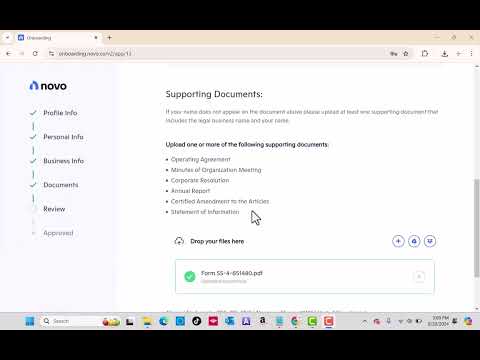
- Gather required documentation. You will typically need your Employer Identification Number (EIN), personal and business identification documents, business formation documents, and ownership information (see the documentation section below for full details).
- Complete the online application form. Navigate to the provider’s website and locate the business checking account application. Fill in your business details, including legal name, business type, industry, and estimated monthly transaction volume.
- Verify your identity and business information. Most providers require identity verification through a government-issued ID and may perform a business credit check or use services like ChexSystems or Early Warning Services to screen for any banking history issues.
- Review and accept the terms. Carefully read the account agreement, fee schedule, and disclosure documents before finalizing your application.
- Fund your account. Once approved, you can typically make an initial deposit via ACH transfer, wire transfer, mobile check deposit, or by linking an existing personal or business bank account.
Top Online Banks for Business Checking Accounts
The landscape of online business banking has expanded significantly, and several providers have distinguished themselves through competitive offerings, superior digital experiences, and strong customer satisfaction. The table below compares leading options available to small business owners and entrepreneurs looking to apply for a business checking account online.
| Provider | Monthly Fee | Minimum Balance | Key Strength |
| BlueVine | $0 | None | Early payment discounting and invoicing tools |
| Relay | $0 (base plan) | None | Multi-user access with role-based permissions |
| Novo | $0 | None | No-frills digital banking with stellar integrations |
| Mercury | $0 (base plan) | None | Advanced treasury management for startups |
| Axos Bank | $0 (with $5k avg daily balance) | $5,000 | Traditional bank with online application and FDIC insurance |
| Chase Business Complete Checking | $0 (with $2k avg daily balance) | $2,000 | Extensive branch and ATM network alongside digital tools |
Each provider serves a slightly different niche. BlueVine and Mercury are particularly popular among startups and venture-backed companies, while Axos and Chase appeal to business owners who want the reassurance of a federally insured institution with a physical presence. Relay excels at team management, making it ideal for businesses with multiple stakeholders who need controlled access to financial operations.
Document Requirements When You Apply for Business Checking Online

Preparation is the single most important factor in a successful online application. Financial institutions are required by law to verify the identity of business owners and ensure compliance with anti-money laundering (AML) regulations. Having your documents ready before you begin the application process dramatically reduces processing time and the likelihood of rejection or delays.
- Employer Identification Number (EIN) — Issued by the IRS, this unique nine-digit number identifies your business for tax purposes and is required by virtually every bank.
- Government-issued photo ID — A valid driver’s license, passport, or state ID for each individual with ownership stakes (typically 25% or more).
- Business formation documents — Articles of Incorporation, Articles of Organization, or a Partnership Agreement, depending on your legal structure.
- Business license or registration — Some states and local jurisdictions require a specific business license or trade name registration.
- Proof of address — Utility bill, lease agreement, or government correspondence showing your business address.
- Ownership structure documentation — A list of all shareholders, members, or partners with their respective ownership percentages.
Having digital copies of each document scanned and ready in PDF or JPEG format will make the upload process seamless. Many online providers now support real-time identity verification through services that cross-reference your information against public databases, further expediting approval.
Expert Tips and Recommendations
Drawing from years of advising small business owners on their banking strategies, here are actionable recommendations to maximize the value of your online business checking account.
- Separate personal and business finances from day one. Commingling funds creates tax complications, undermines liability protections, and makes bookkeeping a nightmare. Even if you are a sole proprietor, a dedicated business checking account is essential.
- Automate recurring payments and transfers. Most online business checking platforms allow you to set up automatic bill pay, scheduled transfers to savings accounts, and recurring vendor payments. Automation reduces the risk of missed payments and saves hours each month.
- Monitor your account daily. Digital banking gives you the power to track transactions in real time. Set up alerts for large withdrawals, low balances, and unusual activity to protect your business from fraud.
- Evaluate fee waivers carefully. Many providers waive monthly fees if you maintain a minimum daily balance or set up direct deposit. Calculate whether these requirements align with your average cash flow before committing.
- Consider scalability. As your business grows, your banking needs will evolve. Choose a provider that offers upgrade paths, additional services like business credit cards and lending, and robust API access if you plan to integrate custom software solutions.

Conclusion

Applying for a business checking account online is one of the most impactful decisions you can make for your business’s financial health and operational efficiency. The process is faster, more transparent, and more accessible than ever before, and the right digital banking platform can save you countless hours and dollars in the long run. By understanding the features that matter, preparing your documentation, and choosing a provider aligned with your business goals, you position your company for sustainable growth from the very first deposit. Take the time to compare options, read the fine print, and select the account that serves your unique needs best — your future self will thank you.
Frequently Asked Questions
1. Can I apply for a business checking account online if I have a poor personal credit score?
Many online business checking account providers do not perform traditional credit checks as part of the application process. Instead, they may screen applicants through banking history databases like ChexSystems. If you have a low personal credit score but a clean banking history, you can still successfully apply for business checking online. Providers like Novo, Relay, and BlueVine are particularly lenient with credit history requirements and focus more on identity verification and business legitimacy.
2. How long does it take to get approved when applying for a business checking account online?
Approval timelines vary by provider but typically range from immediate decisions to two business days. Digital-first banks like Novo and Mercury often approve applications within minutes during business hours, while traditional banks that offer online applications, such as Axos or Chase, may take one to three business days due to additional compliance and verification steps. Having all required documents ready before you start the application significantly reduces wait times.
3. Is a business checking account the same as a merchant services account or payment processing account?
No, these are distinct financial products. A business checking account serves as your primary repository for depositing revenue, paying expenses, and managing day-to-day cash flow. A merchant services account, on the other hand, is specifically designed to process credit and debit card payments from customers. Many online banks offer integrated or partnered merchant processing solutions, but you should evaluate whether your business needs both products and whether bundling them saves you money compared to using separate providers.
4. Do online business checking accounts offer FDIC insurance?
Yes, reputable online banks that are federally chartered hold FDIC insurance, which protects deposits up to $250,000 per depositor, per institution. Before you apply for a business checking account online, verify the bank’s FDIC status through the FDIC BankFind tool. If the provider operates through a partner bank, confirm that your deposits are passed through and fully insured under that partner’s FDIC certificate. This is a non-negotiable safety requirement for any business owner.
5. What happens if I need to deposit physical cash into an online-only business checking account?
Online-only banks do not have physical branches, which means traditional walk-in cash deposits are not an option. However, many providers partner with retail networks such as GreenDot, Walgreens, or CVS that allow you to deposit cash at participating locations for a small fee. Some providers also enable you to mail checks for deposit or use mobile check deposit through their app. If frequent cash deposits are essential to your business model, consider whether an online bank with retail deposit partnerships or a hybrid bank with both digital and physical branches better serves your needs.