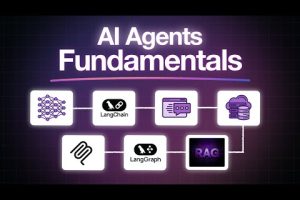
When most people think about artificial intelligence, they picture chatbots, image generators, or voice assistants. But behind every one of those experiences sits something far more powerful — an AI engine. An AI engine is the computational backbone that processes data, runs complex models, and delivers intelligent outputs in real time. Whether you are a developer building the next generation of software, a business leader looking to automate workflows, or simply someone curious about how modern technology works, understanding AI engines is no longer optional. It is essential. In this guide, we will break down what AI engines are, how they function, the most popular platforms available today, and practical strategies for choosing the right one for your needs.
What Exactly Is an AI Engine?

An AI engine is a software framework or system designed to execute machine learning and deep learning models at scale. It handles everything from data ingestion and preprocessing to model inference and output generation. Think of it as the engine block of a car — the component that converts raw fuel (data) into meaningful motion (intelligence). Unlike a simple algorithm that follows rigid rules, an AI engine leverages neural networks, natural language processing, computer vision, and reinforcement learning to adapt, learn, and improve over time. The term “AI engine” has evolved alongside the rapid growth of large language models and generative AI, but the concept itself dates back decades. What has changed is the sheer computational power and architectural sophistication available today.
How AI Engines Work: The Core Architecture
To truly appreciate AI engines, you need to understand their internal architecture. Most modern AI engines follow a layered design that can be broken down into several key components.
Data Ingestion Layer
The first stage involves collecting and normalizing raw data from various sources — databases, APIs, streaming feeds, and unstructured text. The engine must clean, tokenize, and transform this data into a format suitable for model consumption. Without robust data handling, even the most advanced AI model will produce unreliable results.
Model Execution Layer
This is where the actual intelligence lives. The engine loads pre-trained models — such as transformers, convolutional neural networks, or recurrent neural networks — and runs inference on incoming data. Frameworks like TensorFlow, PyTorch, and ONNX Runtime power this layer, determining how quickly and accurately predictions are generated.
Optimization and Serving Layer
Once the model produces an output, the serving layer packages and delivers it to the end user or downstream system. This layer handles load balancing, latency optimization, caching, and sometimes fine-tuning in real time. Companies like NVIDIA with Triton Inference Server and Google with TensorFlow Serving have built entire ecosystems around this component.
Feedback and Learning Loop
The most sophisticated AI engines incorporate a continuous learning loop where outputs are monitored, user feedback is captured, and models are periodically retrained or fine-tuned. This closed-loop system is what separates static tools from truly intelligent platforms.
Types of AI Engines You Should Know
Not all AI engines are created equal. Depending on your use case, you may need a specialized engine or a versatile platform that supports multiple tasks. Here are the primary categories:
- Natural Language Processing (NLP) Engines — Designed for text understanding, sentiment analysis, machine translation, and conversational AI. Examples include OpenAI’s GPT-based inference systems and Google’s T5 framework.
- Computer Vision Engines — Specialized for image recognition, object detection, facial recognition, and video analysis. Platforms like Clarifai and NVIDIA DeepStream fall into this category.
- Generative AI Engines — Built for creating text, images, audio, and video. DALL·E, Stable Diffusion, and Midjourney represent the generative frontier, while tools like ElevenLabs handle AI voice synthesis.
- Recommendation Engines — Powered by collaborative filtering and deep learning, these engines drive personalized content suggestions on platforms like Netflix, Spotify, and Amazon.
- Decision and Predictive Engines — Used for forecasting, risk assessment, and automated decision-making in finance, healthcare, and logistics.
Top AI Engines Compared
Choosing an AI engine can feel overwhelming given the sheer number of options available. The table below compares several leading platforms across key performance and usability metrics.
| AI Engine | Primary Use Case | Open Source? | Cloud Integration | Ease of Use |
| OpenAI GPT Inference | Text generation, chatbots | No (API access) | Azure, AWS | Very High |
| Google Gemini | Multimodal AI | Partial | Google Cloud | High |
| Meta LLaMA | LLM research, deployment | Yes | Self-hosted or cloud | Medium |
| TensorFlow Serving | Model serving at scale | Yes | GCP, on-premise | Medium |
| Hugging Face Transformers | NLP, CV, generative AI | Yes | Cloud or local | High |
| NVIDIA Triton Inference Server | High-performance model serving | Yes | Any GPU environment | Medium-High |
How to Choose the Right AI Engine for Your Project
Selecting the ideal AI engine depends on several critical factors. Here is a step-by-step framework to guide your decision.
- Define your use case clearly. Are you building a chatbot, analyzing images, generating content, or forecasting trends? The use case determines the engine type.
- Evaluate scalability requirements. If you expect millions of requests per day, you need an engine optimized for high-throughput serving, like NVIDIA Triton or Google’s Vertex AI platform.
- Consider your team’s expertise. Some engines require deep ML knowledge to deploy and maintain, while others offer plug-and-play APIs that any developer can integrate within hours.
- Check for fine-tuning support. A rigid engine that only supports out-of-the-box models will limit your long-term potential. Look for platforms that allow custom training and domain adaptation.
- Assess cost and licensing. Open-source engines save on licensing fees but may require significant infrastructure investment. Proprietary APIs offer convenience but can become expensive at scale.
Expert Tips for Maximizing AI Engine Performance
Even the best AI engine will underperform if not used correctly. Here are actionable recommendations from practitioners who deploy these systems daily.
- Optimize your input data. Garbage in, garbage out remains the golden rule. Clean, well-labeled, and representative training data dramatically improves engine output quality.
- Use quantization and pruning. Reducing model size through techniques like 8-bit quantization can slash inference latency by 50-70% without meaningful accuracy loss.
- Implement caching for repeated queries. Many production AI engines serve identical requests across users. Caching these responses reduces compute costs and improves response times.
- Monitor model drift continuously. Real-world data shifts over time. Regularly benchmarking your AI engine against fresh data ensures it stays accurate and relevant.
- Leverage GPU acceleration. Running AI inference on CPUs works for small-scale projects, but GPU-backed serving is the standard for production workloads demanding low latency.
The Future of AI Engines
The AI engine landscape is evolving at a breathtaking pace. Multimodal engines that seamlessly process text, images, audio, and video are becoming the norm rather than the exception. Companies are racing to build engines that can reason, plan, and execute complex multi-step tasks autonomously. Edge AI is another major trend — embedding AI engines directly into devices like smartphones, IoT sensors, and autonomous vehicles so that intelligence happens locally without relying on cloud connectivity. Expect to see further convergence between AI engines and traditional software infrastructure, with AI-native operating systems and runtime environments emerging in the next few years. For anyone investing in AI today, staying informed about these shifts is the difference between building a competitive advantage and falling behind.
Frequently Asked Questions
What is the difference between an AI engine and a machine learning model?
An AI engine is the broader system or framework that manages, executes, and optimizes machine learning models. A machine learning model is the mathematical construct trained on data that makes predictions. The engine is the infrastructure that runs the model efficiently and at scale.
Can AI engines run locally without cloud services?
Yes. Many AI engines, including those powered by Meta’s LLaMA, Hugging Face Transformers, and Ollama, support local deployment on consumer-grade hardware with sufficient GPU resources. This is ideal for privacy-sensitive applications and offline environments.
Which AI engine is best for beginners?
OpenAI’s API and Hugging Face’s Inference API are widely regarded as the most beginner-friendly AI engines. They require minimal setup, offer extensive documentation, and provide pre-built endpoints that let you integrate AI capabilities into your applications within minutes.
How much does it cost to run an AI engine in production?
Costs vary widely based on model size, request volume, and infrastructure. A small NLP engine using a quantized model on a single GPU might cost $50-$200 per month, while a high-traffic generative AI engine serving millions of requests can run into thousands of dollars monthly. Using inference optimization tools like vLLM or TensorRT can significantly reduce these costs.
Are open-source AI engines as good as proprietary ones?
This depends on your requirements. Open-source engines like LLaMA and Mistral have reached near parity with proprietary models on many benchmarks, especially when fine-tuned for specific tasks. The advantage of proprietary engines often lies in ease of use, managed infrastructure, and continuous updates rather than raw model capability.
Conclusion
AI engines are the invisible powerhouses driving the intelligent applications we use every day. From powering conversational assistants to enabling real-time image analysis and automated decision-making, these systems form the critical layer between raw data and actionable intelligence. As the technology matures, the barriers to entry continue to drop, making it easier than ever for individuals and organizations to harness the full potential of artificial intelligence. Whether you are just getting started or scaling a production system to millions of users, understanding AI engines — how they work, which one to choose, and how to optimize them — will give you a decisive edge in an increasingly AI-driven world. Start experimenting today, iterate quickly, and build with intention. The future of intelligent software begins with the engine under the hood.