E-commerce has fundamentally transformed how businesses operate and how consumers shop, buy, and sell products and services across the globe. The e-commerce definition refers to the buying and selling of goods, services, or digital products through electronic networks, primarily the internet. But the e-commerce meaning extends far beyond a simple online transaction — it encompasses the entire ecosystem of digital commerce, including marketing, supply chain management, payment processing, customer experience design, and data analytics. Whether you are a startup founder launching your first online store, a marketing professional studying digital business models, or a curious consumer, understanding what e-commerce truly means in today’s economy is essential. This comprehensive guide dives deep into every facet of electronic commerce, exploring its definitions, models, components, benefits, challenges, and future outlook with practical insights that go well beyond surface-level explanations.
What Is E-Commerce? A Detailed Definition
At its core, the e-commerce definition describes a commercial transaction conducted electronically between a buyer and a seller without the need for physical presence. The term stands for “electronic commerce” and covers all business activities involving the transfer of information, funds, or ownership across digital platforms. This includes retail websites, mobile apps, online marketplaces, social media storefronts, and even enterprise-level procurement portals. However, simply setting up a website and accepting payments does not fully capture what e-commerce means in a strategic sense. True electronic commerce involves the orchestration of technology, logistics, customer relationships, and data-driven decision-making to deliver seamless value exchange in the digital marketplace.
Experts often distinguish between a basic online storefront and a fully integrated e-commerce operation. A basic setup might just display products and process orders, while a mature e-commerce enterprise leverages automation, personalization engines, inventory synchronization, CRM systems, and omnichannel strategies to create a unified buying experience. Understanding this distinction is critical for anyone looking to build or invest in digital commerce.
The Meaning of E-Commerce in the Modern Economy
The meaning of e-commerce has evolved significantly since the first online purchases were made in the mid-1990s. Today, electronic commerce represents a multi-trillion-dollar global industry that touches nearly every sector imaginable — from fashion and electronics to healthcare, real estate, education, and financial services. E-commerce is not just a channel; it is a business paradigm that redefines how value is created, delivered, and consumed.
When we talk about the broader meaning of e-commerce, we include several interconnected layers:
- Digital storefronts and marketplaces where products and services are listed and discovered
- Secure payment gateways that process credit cards, digital wallets, bank transfers, and alternative payment methods
- Order fulfillment and logistics systems that ensure products reach customers efficiently
- Customer relationship management tools that personalize the shopping journey
- Data analytics and business intelligence that drive marketing, pricing, and inventory decisions
- Regulatory compliance frameworks covering consumer protection, data privacy, and tax obligations
Each of these layers contributes to the holistic meaning of e-commerce as an integrated digital commerce ecosystem rather than a single activity.
Types and Models of E-Commerce
Understanding the different e-commerce models is essential for grasping how electronic commerce functions across various business relationships. Each model serves a unique market segment and operates with distinct dynamics, challenges, and opportunities.
Business-to-Consumer (B2C) E-Commerce
B2C e-commerce is the model most consumers are familiar with. It involves businesses selling products or services directly to individual end-users through websites, apps, or digital marketplaces. Companies like Amazon, Zara, and Shopify-powered brands operate primarily in this space. The B2C model relies heavily on consumer psychology, brand storytelling, search engine optimization, social media marketing, and seamless checkout experiences to convert visitors into paying customers.

Business-to-Business (B2B) E-Commerce
B2B electronic commerce involves transactions between businesses, such as a manufacturer purchasing raw materials from a supplier or a retailer ordering bulk inventory from a distributor. B2B e-commerce platforms often feature complex pricing tiers, negotiated contracts, bulk ordering capabilities, and integration with enterprise resource planning (ERP) systems. The B2B digital commerce market is massive, often exceeding B2C in transaction volume, yet it receives less public attention.
Consumer-to-Consumer (C2C) E-Commerce
C2C platforms enable individual consumers to sell directly to other consumers. Platforms like eBay, Etsy, and Facebook Marketplace exemplify this model. These marketplaces thrive on user-generated content, community trust mechanisms like ratings and reviews, and secure escrow payment systems.
Consumer-to-Business (C2B) and Other Emerging Models
In the C2B model, individuals offer products or services to businesses. Freelancers selling their expertise on platforms, influencers monetizing their audience, or consumers submitting bids for custom projects all fall under this category. Additional emerging models include social commerce, where purchasing happens directly within social media platforms like Instagram and TikTok, and live commerce, which combines real-time video streaming with in-app shopping functionality.
Key Components of a Successful E-Commerce Operation
Building a thriving electronic commerce business requires mastering several critical components. Each element plays a vital role in ensuring that the customer journey is smooth, secure, and satisfying.
- User-Friendly Website or App Design — Navigation, page load speed, mobile responsiveness, and intuitive layout directly impact conversion rates.
- Product Catalog Management — High-quality images, detailed descriptions, accurate pricing, and real-time stock updates are non-negotiable.
- Payment Gateway Integration — Supporting multiple payment methods including credit/debit cards, PayPal, Apple Pay, and buy-now-pay-later options expands your customer base.
- Inventory and Order Management — Automated systems that sync stock levels, process orders, and generate shipping labels reduce manual errors.
- Customer Support Infrastructure — Live chat, FAQ sections, return policies, and responsive email support build trust and loyalty.
- Data Security and SSL Certification — Protecting customer data through encryption and compliance with standards like PCI-DSS is essential for credibility.
- Analytics and Performance Tracking — Tools like Google Analytics and heat maps help identify bottlenecks in the buying funnel.
E-Commerce vs Traditional Commerce: A Comparison
Comparing electronic commerce with traditional brick-and-mortar commerce highlights the transformative advantages and trade-offs of doing business online. The table below summarizes key differences.
| Aspect | E-Commerce | Traditional Commerce |
| Operating Hours | 24/7 availability | Limited to business hours |
| Geographic Reach | Global audience | Local or regional |
| Overhead Costs | Lower (no physical storefront) | Higher (rent, utilities, staffing) |
| Customer Experience | Digital, personalized, self-service | Face-to-face, tactile interaction |
| Payment Methods | Digital wallets, cards, bank transfers | Cash, card, check |
| Scalability | Highly scalable with minimal incremental cost | Requires physical expansion |
| Inventory Management | Automated, real-time tracking | Manual or semi-automated |
| Customer Data Collection | Rich behavioral and transactional data | Limited data capture |
While traditional commerce still holds value — especially for experiential shopping and immediate product access — e-commerce continues to dominate in terms of growth, convenience, and scalability. Many successful businesses now adopt an omnichannel approach, blending physical and digital commerce to maximize reach and customer satisfaction.
Benefits of E-Commerce for Businesses and Consumers
The advantages of electronic commerce are extensive and well-documented. For businesses, e-commerce opens doors to global markets, reduces operational costs, and provides powerful tools for customer retention. For consumers, it offers unparalleled convenience, price transparency, and access to a virtually unlimited selection of products and services.
Key benefits include:
- Lower barrier to entry — Starting an online store costs significantly less than opening a physical retail location
- Round-the-clock sales — Your digital storefront never closes, generating revenue even while you sleep
- Data-driven decision making — E-commerce platforms provide detailed insights into customer behavior, preferences, and purchasing patterns
- Personalization at scale — Recommendation engines and targeted marketing deliver tailored experiences to each shopper
- Faster buying process — Customers can browse, compare, and purchase in minutes from any device
- Reduced geographic limitations — A small business in one country can sell to customers worldwide
Expert tip: One of the most overlooked benefits of e-commerce is the ability to run A/B tests on virtually every element of your store — from product page layouts to checkout flow design. This continuous optimization loop is what separates thriving online businesses from stagnant ones.
Challenges and Considerations in Online Commerce

Despite its many advantages, electronic commerce is not without challenges. Businesses must navigate issues related to cybersecurity threats, intense online competition, logistical complexity, and evolving regulatory requirements. Customer trust remains a central concern, as consumers are increasingly wary of data breaches and fraudulent transactions. Additionally, the proliferation of e-commerce has led to market saturation in many niches, making differentiation and brand building more important than ever.
Logistics and last-mile delivery continue to pose significant operational challenges, particularly for businesses selling physical goods internationally. Shipping costs, customs regulations, return management, and delivery speed expectations all require careful planning and investment in robust fulfillment infrastructure.
Another consideration is the digital divide — not all consumers have equal access to high-speed internet, digital payment methods, or the technological literacy needed to navigate online stores. Inclusive e-commerce strategies that account for these disparities can unlock underserved market segments and build more resilient businesses.
Expert Tips to Build a Winning E-Commerce Strategy
If you are ready to dive into electronic commerce, here are actionable recommendations from industry professionals:
- Start with a clear niche and value proposition. Trying to sell everything to everyone is a recipe for failure. Identify a specific audience and solve a real problem for them.
- Invest in mobile-first design. Over 60% of online shopping now happens on mobile devices. Your store must perform flawlessly on smartphones and tablets.
- Prioritize page speed and Core Web Vitals. Google’s ranking algorithm heavily penalizes slow-loading sites, and consumers abandon stores that take more than three seconds to load.
- Build an email marketing funnel early. Email remains the highest-ROI marketing channel for e-commerce businesses. Capture leads from day one and nurture them with personalized sequences.
- Leverage social proof relentlessly. Customer reviews, user-generated content, influencer partnerships, and trust badges all significantly boost conversion rates.
- Track your unit economics obsessively. Know your customer acquisition cost, average order value, lifetime value, and gross margin for every product you sell.
Conclusion
The e-commerce definition and meaning have expanded dramatically over the past two decades. What began as a novel way to buy books and CDs online has grown into a comprehensive digital commerce ecosystem that powers millions of transactions every second worldwide. Understanding electronic commerce — from its foundational definition to its nuanced models, components, and strategic frameworks — is no longer optional for entrepreneurs, marketers, or business leaders. Whether you are building a small niche store or scaling a global enterprise, mastering the principles of e-commerce will give you the competitive edge needed to thrive in the digital age. The future of commerce is undeniably digital, and those who embrace its full meaning and potential will be the ones who lead the next wave of economic innovation.
FAQ: Common Questions About E-Commerce Definition and Meaning
1. What is the simplest e-commerce definition that a beginner should understand?
The simplest e-commerce definition is the buying and selling of products or services over the internet, where the entire transaction — from browsing and selection to payment and delivery — happens electronically without requiring a physical storefront or face-to-face interaction.
2. How does e-commerce differ from e-business?
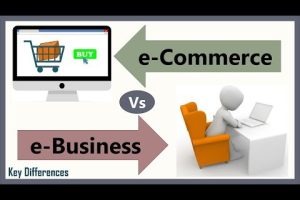
While people often use these terms interchangeably, e-commerce specifically refers to the transactional aspects of buying and selling online, whereas e-business encompasses the full scope of running a business digitally, including internal operations, supply chain management, human resources, and customer service alongside sales.
3. Which e-commerce model has the fastest growth rate in 2024?
Social commerce and live commerce are currently the fastest-growing e-commerce models, driven by platforms like TikTok Shop, Instagram Shopping, and livestream selling events that combine entertainment with instant purchasing capabilities directly within social media apps.
4. Do I need a large budget to start an e-commerce business?
No, you do not need a large budget to launch an e-commerce venture. Platforms like Shopify, WooCommerce, and BigCommerce offer affordable plans, and dropshipping models allow you to start with minimal upfront inventory investment. The key is to focus on a clear niche, lean operations, and smart marketing from day one.
5. What does e-commerce mean for traditional retail businesses?
For traditional retail businesses, e-commerce represents both a threat and an opportunity. Brick-and-mortar stores that fail to adopt digital commerce risk losing market share to online competitors, while those that integrate e-commerce into their strategy — through omnichannel fulfillment, buy-online-pick-up-in-store (BOPIS) models, and digital customer engagement — can significantly expand their reach and revenue potential.