


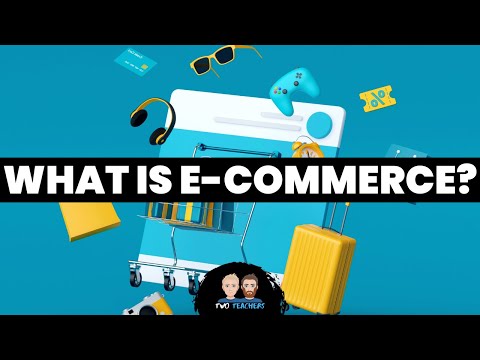
The definition of e-commerce encompasses far more than just buying and selling products online. At its core, e-commerce—short for electronic commerce—refers to the buying and selling of goods and services through digital networks, primarily the internet. But beneath that simple explanation lies a vast ecosystem of technologies, business models, payment systems, logistics networks, and consumer behaviors that have fundamentally reshaped how the global economy operates. Whether you are a curious beginner exploring online shopping, an entrepreneur planning to launch a digital store, or a business owner looking to scale, understanding what e-commerce truly means and how it functions is the first step toward unlocking serious opportunities in the digital marketplace.
What Is the Definition of E-Commerce?
The formal e-commerce definition describes the transaction of goods, services, or information conducted electronically between businesses and consumers, or between businesses themselves, using the internet or other computer networks. It eliminates the need for physical storefronts, paper-based transactions, and geographical limitations. According to industry analysts, e-commerce includes the entire lifecycle of an online purchase: browsing digital catalogs, selecting products, making secure payments, tracking shipments, and even handling post-sale customer support. This definition of electronic commerce has evolved significantly since the early days of the world wide web, expanding from basic online retail into a multi-trillion-dollar global industry.
What many people overlook is that e-commerce also covers digital products such as software downloads, streaming subscriptions, online courses, and electronic books. It includes business-to-business (B2B) procurement portals where manufacturers order raw materials from suppliers. And it extends to the rapidly growing m-commerce segment—mobile commerce—where consumers shop directly from smartphones and tablets. Understanding the full scope of what e-commerce means is essential for anyone looking to participate meaningfully in the digital economy.
Types of E-Commerce Models Explained
Not all online transactions are the same. The e-commerce definition spans several distinct business models, each serving different participants in the digital marketplace. Here are the primary types you should know:
1. Business-to-Consumer (B2C)
This is the model most people recognize immediately. B2C e-commerce occurs when a company sells products or services directly to individual consumers. Think of giants like Amazon, Walmart.com, or niche online retailers like Warby Parker. This model relies heavily on branding, user experience, and efficient delivery networks to drive repeat purchases and customer loyalty.
2. Business-to-Business (B2B)
B2B electronic commerce involves transactions between businesses—such as a manufacturer purchasing components from a wholesaler through an online procurement platform. B2B e-commerce typically involves larger order volumes, longer sales cycles, and negotiated pricing. Platforms like Alibaba and ThomasNet facilitate these transactions at enormous scale.
3. Consumer-to-Consumer (C2C)
C2C e-commerce connects individual buyers and sellers, often through a third-party marketplace. eBay, Etsy, and Facebook Marketplace are prime examples. This model empowers individuals to monetize unused items, handmade goods, or specialized expertise directly to a global audience.
4. Consumer-to-Business (C2B)

In the C2B model, individual consumers offer products or services to businesses. Freelancers on platforms like Upwork or Fiverr operate in this space. Similarly, influencer marketing and user-generated content creation fall under this category, where consumers provide value directly to brands.
5. Direct-to-Consumer (D2C)
D2C is a rapidly growing subset of B2C where brands bypass traditional retailers entirely and sell directly to customers through their own websites or apps. Companies like Dollar Shave Club, Glossier, and Gymshark built massive empires using this approach, maintaining full control over brand experience and customer data.
Key Components of E-Commerce Infrastructure
A successful online business requires more than just a website. The e-commerce ecosystem depends on several critical components working in harmony:
- E-Commerce Platform: Software solutions like Shopify, WooCommerce, Magento, and BigCommerce that power online storefronts and manage product catalogs, inventory, and transactions.
- Payment Processing: Secure gateways such as Stripe, PayPal, and Square that handle financial transactions, supporting credit cards, digital wallets, buy-now-pay-later options, and even cryptocurrency payments.
- Inventory Management: Systems that track stock levels, automate reordering, and synchronize availability across multiple sales channels in real time.
- Order Fulfillment and Logistics: Warehousing solutions, shipping carriers, and last-mile delivery networks that ensure products reach customers efficiently and reliably.
- Customer Relationship Management (CRM): Tools that track customer interactions, purchase history, and preferences to personalize marketing and improve retention.
- Security and Compliance: SSL certificates, PCI DSS compliance, and data protection protocols that safeguard sensitive customer information and build trust.
How E-Commerce Works: The Transaction Process
Understanding how online commerce actually operates from start to finish helps demystify the process. Here is the typical e-commerce transaction flow:
- A customer discovers a product through search engines, social media, or direct website visits.
- The customer browses product listings, reads reviews, compares prices, and adds items to a virtual shopping cart.
- At checkout, the customer enters shipping details and selects a payment method.
- The e-commerce platform communicates with the payment gateway to authorize and process the transaction securely.
- The order is confirmed, inventory is updated in real time, and the customer receives an order confirmation email.
- The order moves to fulfillment—either from a warehouse, dropshipping supplier, or local store—where it is packaged and handed to a shipping carrier.
- The customer receives the product, and the feedback loop begins with reviews, return requests, or repeat purchases.
E-Commerce vs Traditional Commerce: A Comparison

To truly appreciate what e-commerce means in the modern economy, it helps to compare it directly with traditional brick-and-mortar commerce. Here is a detailed breakdown:
| Feature | E-Commerce | Traditional Commerce |
| Operating Hours | 24/7, automated availability | Limited by business hours and location |
| Geographic Reach | Global audience, no physical boundaries | Restricted to local or regional markets |
| Overhead Costs | Lower—no physical storefront rent | Higher—rent, utilities, staffing for physical space |
| Customer Data Collection | Detailed analytics and behavioral tracking | Limited, often manual or paper-based |
| Scalability | Highly scalable with minimal marginal cost increase | Scaling requires physical expansion, more staff, more inventory space |
| Customer Experience | Personalized through AI and data, but lacks tactile interaction | Tactile product experience, immediate possession |
| Payment Methods | Digital wallets, cards, BNPL, cryptocurrency | Cash, card, check—primarily in-person |
Benefits and Challenges of E-Commerce
The advantages of electronic commerce are compelling, but the landscape also presents real challenges that aspiring entrepreneurs must navigate:
Key Benefits:
- Access to a virtually unlimited customer base without geographic constraints
- Lower startup costs compared to opening a physical retail location
- Ability to automate marketing, sales, and fulfillment processes at scale
- Rich data analytics that enable precise targeting, personalization, and performance optimization
- Flexibility to operate from anywhere in the world with an internet connection
- Easier to test new products, pricing strategies, and marketing campaigns in real time
Common Challenges:
- Intense competition with millions of online stores vying for consumer attention
- Logistics complexity—managing shipping, returns, and last-mile delivery
- Building and maintaining customer trust in a digital environment
- Staying current with rapidly evolving technology, platform updates, and cybersecurity threats
- Navigating tax regulations, customs duties, and compliance across different jurisdictions
Expert Tips for Building a Successful E-Commerce Business
If you are serious about entering the online commerce space, these practical recommendations will set you apart from the competition:
- Choose the right niche. Avoid saturated markets. Conduct thorough keyword research and competitor analysis to find a gap where you can offer unique value.
- Invest in mobile-first design. Over 60% of e-commerce traffic now comes from mobile devices. Your store must load fast, look great, and convert seamlessly on smaller screens.
- Prioritize page speed and SEO. Google rewards fast-loading sites with higher rankings. Compress images, use lazy loading, and implement structured data markup.
- Build an email list from day one. Email marketing remains the highest ROI channel in digital commerce. Offer lead magnets, run welcome sequences, and segment your audience for personalized campaigns.
- Leverage social proof. Actively collect and showcase customer reviews, user-generated content, and testimonials. Social validation dramatically increases conversion rates.
- Diversify your sales channels. Do not rely solely on your own website. List on marketplaces like Amazon, Etsy, and eBay, and explore social commerce through Instagram Shopping and TikTok Shop.
Frequently Asked Questions
What does e-commerce mean in simple terms?
In simple terms, e-commerce means buying and selling goods or services over the internet. It replaces the traditional process of visiting a physical store with an online browsing and purchasing experience, connecting buyers and sellers through digital platforms and secure payment systems.
How does e-commerce make money?
E-commerce businesses generate revenue by selling products or services to customers at a markup over their cost of goods sold. They may also earn through subscription models, affiliate commissions, advertising revenue on their platforms, or by charging sellers listing and transaction fees on marketplace platforms.
What are the four main types of e-commerce?
The four primary types of electronic commerce are B2C (business-to-consumer), B2B (business-to-business), C2C (consumer-to-consumer), and C2B (consumer-to-business). Each type defines the relationship between the parties involved in the online transaction and determines the nature of products, services, and negotiation processes involved.
Is e-commerce the same as online shopping?
While online shopping is a subset of e-commerce, they are not identical. E-commerce encompasses the entire digital commerce ecosystem including B2B transactions, supply chain management, digital marketing, payment processing, and data analytics. Online shopping specifically refers to the consumer act of browsing and purchasing products over the internet.
What skills do you need to succeed in e-commerce?
Success in electronic commerce requires a blend of digital marketing expertise, data analytics skills, supply chain knowledge, customer service proficiency, and technical understanding of e-commerce platforms. Strong written communication, SEO knowledge, and adaptability to rapidly changing consumer preferences are equally critical for long-term growth.
Can anyone start an e-commerce business with no experience?
Yes, absolutely. Modern e-commerce platforms like Shopify and WooCommerce have dramatically lowered the barrier to entry. Beginners can start with dropshipping or print-on-demand models that require minimal upfront investment. However, sustained success demands continuous learning, strategic planning, and a willingness to adapt based on real market data and customer feedback.
Conclusion
The definition of e-commerce is evolving alongside technology, consumer expectations, and global economic shifts. What started as simple online retail has blossomed into a comprehensive digital commerce ecosystem that touches every industry, every economy, and virtually every consumer on the planet. Whether you are exploring what e-commerce means for your small business, evaluating online business opportunities, or simply trying to understand the digital marketplace better, the knowledge you have gained here provides a solid foundation. The digital economy rewards those who understand not just the mechanics of online transactions, but the deeper dynamics of customer behavior, platform ecosystems, and technological innovation that drive sustainable growth in this space.