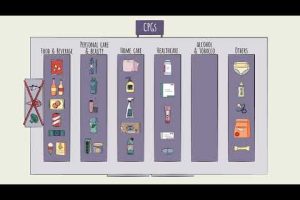
The consumer goods industry is undergoing a dramatic transformation in 2025, driven by shifting consumer expectations, rapid technological advancements, and an increasingly complex global marketplace. From the shelves of major retail chains to the storefronts of niche e-commerce brands, companies are adapting at an unprecedented pace. If you operate in the fast-moving consumer goods (FMCG) space or follow consumer packaged goods (CPG) developments closely, you already know that staying ahead means understanding where the industry is headed. This deep dive explores the most impactful consumer goods industry trends shaping 2025, offering actionable insights for business leaders, marketers, and strategists who need to make informed decisions now.
Why Consumer Goods Trends in 2025 Matter More Than Ever
The consumer goods sector remains one of the largest and most competitive industries worldwide, with global revenue projected to surpass $7 trillion by the end of 2025. What makes this year particularly significant is the convergence of several forces — digital transformation, sustainability mandates, post-pandemic behavioral shifts, and geopolitical supply chain realignments — all hitting the market simultaneously. Companies that fail to anticipate these consumer goods market trends risk losing relevance, while those that act decisively stand to capture significant market share.
For beginners entering the industry, understanding these dynamics is foundational. For experienced professionals, 2025 represents a pivotal inflection point where legacy strategies no longer suffice. The trends outlined below span the spectrum from immediate tactical adjustments to long-term strategic pivots.
1. Artificial Intelligence Reshapes Every Link in the Value Chain
Artificial intelligence is no longer a buzzword in the consumer goods industry — it is an operational backbone. In 2025, AI-driven tools are embedded across demand forecasting, inventory optimization, pricing strategy, and even product formulation. Machine learning models trained on real-time point-of-sale data now enable companies to predict consumer demand with remarkable accuracy, reducing both overstock and stockout scenarios.
Key AI Applications Transforming Consumer Goods
- Predictive Demand Sensing: Advanced algorithms analyze social media sentiment, weather patterns, and macroeconomic indicators to forecast product demand at the SKU level, sometimes weeks before traditional models can.
- Generative AI for Product Development: Brands like Unilever and P&G are leveraging generative AI to accelerate innovation cycles, testing thousands of flavor, formula, and packaging concepts digitally before physical prototyping.
- Dynamic Pricing Engines: Real-time competitive pricing analysis allows consumer goods companies to adjust prices automatically based on competitor moves, inventory levels, and regional purchasing power.
- Supply Chain Resilience: AI-powered risk monitoring systems flag potential disruptions — from port congestion to raw material shortages — enabling proactive rerouting and supplier diversification.
2. Sustainability Moves from Brand Messaging to Operational Reality
Consumers in 2025 are significantly more discerning about environmental claims than they were a decade ago. Greenwashing is becoming a genuine reputational risk, and regulatory bodies across the European Union, North America, and Asia-Pacific are tightening requirements around environmental labeling and carbon reporting. The consumer goods sustainability trends of 2025 reflect a shift from aspirational pledges to measurable, verifiable action.

What Genuine Sustainability Looks Like in Practice
- Circular Economy Integration: Companies are designing products for reuse, refill, and recycling from the ground up rather than as afterthoughts. Brands like TerraCycle partnerships and Loop pilots are normalizing refillable packaging across categories from household cleaners to personal care.
- Carbon-Neutral Supply Chains: Leading CPG firms are investing in supplier-level decarbonization programs, using blockchain for transparent carbon tracking from raw material sourcing to finished product delivery.
- Regenerative Agriculture Sourcing: Consumer goods companies are moving beyond sustainable sourcing to regenerative agriculture commitments, working directly with farmers to restore soil health, biodiversity, and water systems.
- Bio-Based and Alternative Ingredients: The shift toward plant-based proteins, algae-derived materials, and fermentation-produced ingredients continues to accelerate, driven by both consumer demand and cost competitiveness.
| Sustainability Approach | 2023 Adoption Level | 2025 Projected Adoption | Key Driver |
| Refillable Packaging Programs | Low / Niche | Growing Mainstream | Consumer demand + regulatory pressure |
| Blockchain Carbon Tracking | Early Pilots | Scaled Implementation | ESG compliance requirements |
| Regenerative Sourcing | Limited | Expanding Rapidly | Brand differentiation + farmer partnerships |
| Bio-Based Materials | Moderate | Widespread | Cost parity + performance improvements |
3. Direct-to-Consumer Models and the Retail Media Gold Rush
The direct-to-consumer (DTC) revolution that began in fashion and beauty has now fully permeated the consumer goods sector. In 2025, established CPG brands are investing heavily in DTC channels — their own websites, subscription models, and proprietary digital storefronts — to capture first-party data and build direct relationships with end consumers. Simultaneously, the retail media network (RMN) ecosystem has exploded, with major retailers like Walmart, Target, and Amazon offering highly targeted advertising platforms that allow brands to reach shoppers at the point of purchase decision.
Retail Media Networks: The Fastest-Growing Advertising Channel
Retail media is projected to become a $100 billion global market by 2025. Unlike traditional digital advertising, retail media leverages actual purchase data, enabling consumer goods companies to measure advertising effectiveness in near real-time. Brands are shifting significant media budgets from broad-reach platforms to retail media networks because of the superior attribution and conversion rates.
4. Hyper-Personalization Powered by First-Party Data
The death of third-party cookies has accelerated a fundamental shift in how consumer goods companies understand and engage their audiences. In 2025, personalization is no longer about recommending similar products — it is about tailoring product experiences, subscription boxes, digital content, and even pricing to individual consumer preferences. Brands that invest in robust first-party data strategies — loyalty programs, interactive quizzes, personalized packaging — are outperforming competitors in customer lifetime value and retention rates.
5. Health, Wellness, and Functional Consumer Goods
The boundary between food, beverages, supplements, and personal care continues to blur as consumers seek products that deliver functional benefits beyond basic utility. In 2025, the wellness-infused consumer goods category is one of the fastest-growing segments globally. Gut health ingredients, adaptogenic botanicals, sleep-support formulations, and mood-enhancing compounds are appearing across product categories from snack bars to skincare.
Expert Tip: The most successful brands in this space combine clinical evidence with transparent storytelling. Consumers in 2025 are savvy enough to distinguish between genuine functional benefits and marketing hype. Third-party certifications, clinical trial references, and clear dosage information are now table stakes for credibility.
6. Emerging Market Expansion and Localization
While developed markets remain significant revenue engines, the consumer goods industry growth story in 2025 is increasingly concentrated in emerging economies — particularly Southeast Asia, Sub-Saharan Africa, and Latin America. Companies are moving beyond simple product exports to deep localization strategies, adapting formulations, packaging sizes, pricing models, and distribution networks to match local purchasing power and cultural preferences.
Localization Strategies That Actually Work
- Micro-Fulfillment Networks: Instead of relying on centralized distribution, brands are building localized fulfillment hubs that reduce delivery times and costs in dense urban markets.
- Affordable Innovation Units: R&D teams are creating smaller, lower-cost product variants designed specifically for price-sensitive consumer segments without compromising quality perception.
- Mobile-First Commerce: In many emerging markets, mobile devices are the primary (and often only) shopping channel. Consumer goods companies are optimizing their entire digital experience for mobile-first consumers.
7. Smart Packaging and Digital Transparency
Packaging in 2025 serves a dual purpose: it protects the product and it connects the consumer to the brand. QR codes, NFC tags, and augmented reality (AR) experiences embedded in packaging are becoming standard, enabling consumers to access detailed ingredient information, sustainability credentials, usage instructions, and exclusive digital content. This digital layer creates new engagement touchpoints and builds trust through radical transparency.
Comparison: Traditional vs. Future-Forward Consumer Goods Strategies
| Dimension | Traditional Approach | 2025 Future-Forward Approach |
| Data Strategy | Reliance on third-party data and broad demographics | First-party data, zero-party data, and real-time behavioral analytics |
| Distribution | Wholesale to traditional retail | Omnichannel with DTC, retail media, and social commerce integration |
| Product Development | Multi-year cycles with centralized R&D | AI-accelerated innovation with consumer co-creation |
| Sustainability | Marketing-driven initiatives | Embedded circularity with measurable carbon accounting |
| Consumer Engagement | One-way advertising campaigns | Personalized, interactive, and community-driven experiences |
Whether you are a brand manager at a multinational corporation or an entrepreneur building a CPG startup, these expert recommendations can help you capitalize on the trends outlined above:
- Invest in your data infrastructure now. The companies that will dominate 2025 and beyond are those with clean, integrated, and accessible first-party data. Prioritize CDP (Customer Data Platform) implementation and data governance frameworks.
- Test AI tools in low-risk areas first. Start with demand forecasting or content generation before moving to more complex applications like autonomous supply chain decision-making.
- Build sustainability into your product architecture, not just your marketing. Consumers can tell the difference, and regulatory scrutiny will only increase.
- Develop a retail media strategy. Allocate dedicated budget and personnel to retail media networks. The ROI potential is significant, but it requires specialized expertise.
- Think locally, scale globally. If you are expanding into emerging markets, resist the temptation to simply translate your existing offering. Deep localization wins.
Conclusion
The consumer goods industry in 2025 is defined by convergence — the merging of technology, sustainability, data intelligence, and evolving consumer values into a landscape that rewards agility and authenticity. The trends discussed in this article are not isolated phenomena; they interact and reinforce each other. AI enables hyper-personalization, which drives DTC engagement, which generates first-party data, which fuels further AI optimization. Companies that understand these interconnections and build strategies accordingly will not only survive the shifts ahead but will define the next era of consumer goods.
The window for meaningful transformation is open, but it is not open forever. The brands and businesses that take decisive action in 2025 — investing in technology, committing to genuine sustainability, and placing the consumer at the center of every decision — will be the ones that thrive in the years to come.
Frequently Asked Questions
What are the top consumer goods industry trends for 2025?
The leading consumer goods industry trends for 2025 include AI-driven supply chain optimization, deep sustainability integration and circular economy models, the rapid expansion of retail media networks, hyper-personalization through first-party data, wellness-infused product innovation, emerging market localization strategies, and smart packaging with digital transparency features. These trends collectively represent a shift toward technology-enabled, consumer-centric, and environmentally responsible operations across the CPG sector.
How is artificial intelligence changing the consumer packaged goods industry?
AI is transforming the CPG industry by enabling real-time demand forecasting, accelerating product development through generative design, powering dynamic pricing strategies, and enhancing supply chain resilience through predictive risk monitoring. Companies using AI effectively in 2025 are seeing measurable improvements in operational efficiency, reduced waste, faster time-to-market for new products, and more precise marketing ROI.

Why is retail media becoming so important for consumer goods brands?
Retail media networks have become critical because they offer consumer goods brands access to purchase-level data and advertising at the exact moment of consumer decision-making. Unlike traditional digital advertising, retail media provides near-instant attribution, higher conversion rates, and the ability to reach shoppers on platforms like Walmart, Target, and Amazon where the majority of consumer goods purchases now occur.
What does genuine sustainability look like for consumer goods companies in 2025?
Genuine sustainability in 2025 goes beyond marketing claims to include measurable carbon accounting across entire supply chains, implementation of circular economy principles in packaging design, investment in regenerative agriculture sourcing, adoption of bio-based materials, and transparent reporting verified through third-party certifications. Consumers and regulators increasingly demand proof, not promises.
How can emerging market expansion drive growth for consumer goods companies?
Emerging markets offer significant growth potential due to rising disposable incomes, urbanization, and digital adoption. Success requires deep localization — adapting product formulations, packaging sizes, pricing, and distribution to local preferences rather than simply exporting existing products. Companies that invest in mobile-first commerce, micro-fulfillment networks, and culturally resonant branding are best positioned to capture this opportunity.