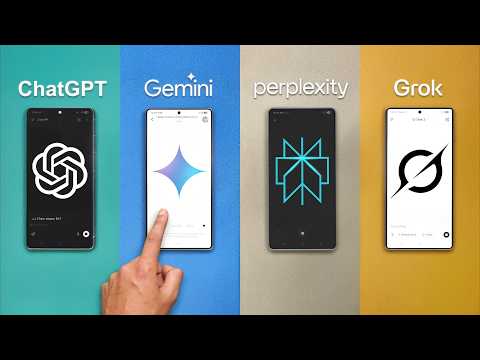
If you have been searching for an AI like ChatGPT, you are not alone. Millions of professionals, students, entrepreneurs, and developers have turned to conversational artificial intelligence to streamline their workflows, generate content, automate tasks, and find answers to complex questions. ChatGPT by OpenAI popularized the concept of accessible, human-like AI chatbots, but it is far from the only option available today. The landscape of generative AI has exploded, and numerous powerful alternatives now offer unique strengths in reasoning, coding, image generation, and enterprise-grade features. Whether you are a beginner exploring AI for the first time or an advanced user looking for specialized capabilities, this comprehensive guide will walk you through everything you need to know about finding the best AI tools similar to ChatGPT.
What Is an AI Like ChatGPT?
An AI like ChatGPT refers to a class of large language models (LLMs) and conversational AI platforms that can understand and generate human-like text based on the input they receive. These systems are built on transformer-based neural networks trained on massive datasets spanning books, websites, articles, and code repositories. The result is an AI assistant capable of answering questions, writing essays, debugging code, translating languages, summarizing documents, brainstorming ideas, and much more. What makes these tools so compelling is their ability to maintain context across a conversation, adapt to different tones, and deliver responses that feel remarkably natural and informed.
While ChatGPT remains the most recognized name in this space, the term “AI like ChatGPT” encompasses a broad ecosystem of competitors, open-source alternatives, and specialized models designed for niche applications. Understanding what sets each of these apart is essential for making an informed choice.
How Do These AI Models Work Under the Hood?
At their core, AI chatbots similar to ChatGPT rely on deep learning architectures called transformers. These models use self-attention mechanisms to weigh the importance of different words in a sentence, allowing them to generate coherent, contextually relevant responses. During training, the model learns patterns in language, logic, and domain knowledge by processing billions of text samples. The more data and the longer the training, the more capable the model becomes at handling nuanced queries and complex tasks.
After pre-training on broad datasets, many of these models undergo a process called fine-tuning and reinforcement learning from human feedback (RLHF). This is what makes an AI like ChatGPT feel polished and helpful rather than robotic and unpredictable. The human feedback loop teaches the model to prioritize accuracy, safety, and usefulness in its responses.
Top AI Alternatives to ChatGPT in 2024
The market for AI chatbots and conversational agents has grown dramatically. Below are some of the most notable alternatives that rival or complement ChatGPT in different ways.
- Google Gemini (formerly Bard): Powered by Google’s vast search ecosystem, Gemini excels at real-time information retrieval, factual accuracy, and integration with Google Workspace tools. It leverages the Pathways Language Model (PaLM) and is deeply integrated with Google Search, making it a strong choice for research-heavy tasks.
- Claude by Anthropic: Claude is renowned for its safety-focused design and long-context window. Users seeking an AI like ChatGPT for handling lengthy documents or nuanced ethical discussions often prefer Claude for its thoughtful and measured responses.
- Microsoft Copilot (formerly Bing Chat): Built on OpenAI’s GPT-4 technology and integrated into the Microsoft ecosystem, Copilot is a natural choice for users already working within Word, Excel, PowerPoint, and the Edge browser.
- Meta LLaMA (Large Language Model Meta AI): An open-source model that has become a favorite among developers and researchers. LLaMA allows for fine-tuning and customization, making it ideal for enterprise deployments and specialized applications.
- Perplexity AI: A search-oriented conversational AI that combines LLM capabilities with real-time web search, providing cited and sourced answers rather than relying solely on training data.
- Grok by xAI: Elon Musk’s AI assistant is designed to answer questions with a bit of humor and a rebellious streak, while also pulling from real-time data on X (formerly Twitter).
ChatGPT vs. Top Alternatives Comparison

| Feature | ChatGPT | Gemini | Claude | Copilot | Perplexity |
| Base Model | GPT-4 / GPT-4o | Gemini Pro / Ultra | Claude 3.5 Sonnet | Powered by GPT-4 | Proprietary LLM + web |
| Free Tier | Limited | Yes | Limited | Yes | Yes |
| Internet Access | Yes (Plus) | Yes | Limited | Yes | Yes |
| Long Context Window | 128K tokens | Up to 1M tokens | 200K tokens | 128K tokens | Varies |
| Best For | General-purpose tasks | Research and search | Long-form analysis | Microsoft ecosystem | Fact-checking and citations |
| Open Source | No | No | No | No | No |
How to Choose the Right AI Like ChatGPT for Your Needs
Choosing the best conversational AI depends on what you plan to do with it. Different tools shine in different areas, and the right choice will align with your specific use case, budget, and technical requirements.
- Define Your Primary Use Case. Are you using AI for creative writing, coding assistance, customer support, research, or general productivity? This single decision narrows your options significantly.
- Evaluate Pricing and Free Tier Offerings. Many platforms offer a free version with limited capabilities and a premium subscription for full access. Consider whether the paid features justify the cost for your workflow.
- Check Integration Capabilities. If you rely heavily on Google Workspace, Microsoft 365, or specific development environments, choosing an AI that integrates natively will save you significant time and friction.
- Assess Privacy and Data Policies. Enterprise users in particular should scrutinize how their data is stored, used, and protected. Some platforms offer enterprise-tier privacy guarantees that others do not.
- Test Multiple Options. The best way to find your ideal AI assistant is to try several. Most of the tools listed above offer free trials or free tiers that let you evaluate performance firsthand.
Best Use Cases for ChatGPT-Like AI Tools

Conversational AI platforms have found their way into virtually every industry and personal productivity scenario. Here are some of the most impactful use cases where an AI like ChatGPT delivers exceptional value:
- Content Creation and Copywriting: Blog posts, marketing copy, social media captions, email drafts, and ad copy can all be generated or refined with impressive quality by modern LLMs.
- Software Development and Coding: Many AI chatbots can write, debug, and explain code in dozens of programming languages, making them invaluable for developers at all skill levels.
- Research and Knowledge Synthesis: Summarizing academic papers, comparing concepts, and extracting key takeaways from lengthy documents saves hours of manual reading.
- Language Translation and Learning: Real-time translation and conversational language practice are now accessible to anyone with an internet connection.
- Customer Support Automation: Businesses deploy AI chatbots on their websites to handle FAQs, triage support tickets, and provide 24/7 assistance without increasing headcount.
- Data Analysis and Spreadsheet Assistance: Tools like Microsoft Copilot allow users to query spreadsheets, create charts, and generate pivot tables using natural language instructions.
Practical Tips and Expert Recommendations
Getting the most out of an AI like ChatGPT requires more than just typing a question and accepting the first answer. Here are expert-level strategies to elevate your results:
- Be Specific in Your Prompts. Vague queries yield vague responses. The more context, detail, and specificity you provide, the more useful the output will be.
- Iterate and Refine. Treat the first response as a draft. Ask follow-up questions, request revisions, and push the model to expand on weak points.
- Use Role-Playing Prompts. Asking the AI to “act as a senior marketing strategist” or “respond as a Python expert” dramatically improves the quality and relevance of its answers.
- Verify Critical Information. Even the best AI models can hallucinate facts or produce outdated information. Always cross-check important claims, especially for academic or professional work.
- Leverage System Prompts. Many platforms allow you to set a system-level instruction that shapes the AI’s behavior throughout the conversation. Use this to establish tone, format preferences, and boundaries.
The Future of Conversational AI
The technology behind AI like ChatGPT is evolving at an extraordinary pace. We are seeing trends such as multimodal models that handle text, images, audio, and video simultaneously; agentic AI systems that can autonomously complete multi-step tasks; and smaller, more efficient models that run locally on personal devices. Open-source projects are accelerating innovation by allowing the global community to contribute, fine-tune, and build upon existing models. As these tools become more deeply integrated into our daily workflows, the line between human and machine collaboration will continue to blur in productive and creative ways.
Frequently Asked Questions
1. What AI is most similar to ChatGPT for everyday use?
Google Gemini and Microsoft Copilot are the closest alternatives for everyday use. Both offer free tiers, internet connectivity, and seamless integration with their respective ecosystems. Gemini leverages Google Search for real-time information, while Copilot brings GPT-4-level capabilities into the Microsoft Office suite.
2. Is there a free AI like ChatGPT that works offline?
Yes. Meta’s LLaMA models are open-source and can be run locally on your computer with sufficient hardware. Options like LM Studio and Ollama make it straightforward to download and run LLaMA 3 or other open-source models entirely offline, giving you full privacy control over your data.
3. Which AI chatbot is best for coding and software development?
GitHub Copilot, ChatGPT, and Claude are all excellent for coding tasks. GitHub Copilot is deeply integrated into VS Code and other IDEs for real-time code suggestions. ChatGPT excels at explaining code concepts and debugging, while Claude’s large context window makes it ideal for reviewing entire codebases at once.
4. Can I use an AI like ChatGPT for academic research and citations?
Perplexity AI is the best choice for research and citation needs. Unlike general-purpose chatbots, Perplexity searches the live web and provides sourced answers with clickable citations, making it far more reliable for academic and fact-based work where accuracy is critical.
5. How do I know if an AI chatbot is better than ChatGPT for my specific needs?
The answer depends on your workflow. If you need deep document analysis, Claude’s long context window is unmatched. If real-time search accuracy matters most, Gemini or Perplexity are superior. For enterprise environments tied to Microsoft tools, Copilot is the natural fit. Test multiple platforms with your actual tasks to find the best match.
Conclusion
The world of AI like ChatGPT is richer and more diverse than ever before. From Google Gemini’s real-time search intelligence to Claude’s thoughtful long-form reasoning, from Meta’s open-source flexibility to Perplexity’s citation-backed accuracy, there is a conversational AI tool perfectly suited for nearly every need. The key is understanding your priorities—whether that is cost, privacy, specialization, or integration—and choosing a platform that aligns with your goals. As generative AI continues to mature, these tools will only become more capable, more accessible, and more indispensable in both professional and personal contexts. Start experimenting today, and you will quickly discover which AI assistant works best for you.