


AI social commerce is reshaping the way brands connect with consumers, turning everyday social media interactions into seamless, intelligent shopping experiences. By combining artificial intelligence with social platforms, businesses can now deliver hyper-personalized recommendations, automate product discovery, and close sales without ever leaving the app users already love. If you have been wondering how to stay ahead in digital retail, understanding the intersection of AI and social commerce is no longer optional—it is essential. This guide dives deep into the mechanics, benefits, strategies, and future trajectory of AI-driven social selling, giving you actionable insights whether you are just getting started or looking to level up your existing efforts.
What Is AI Social Commerce?
AI social commerce refers to the integration of artificial intelligence technologies—such as machine learning, natural language processing, computer vision, and predictive analytics—into social media platforms and e-commerce ecosystems. The goal is to create a frictionless journey from content discovery to purchase, all within a social environment where users already spend the majority of their digital time. Unlike traditional social commerce, which relies heavily on manual curation and human decision-making, AI social commerce leverages data-driven algorithms to understand user behavior, preferences, and intent in real time.
This fusion of social interaction and intelligent automation is what makes platforms like Instagram Shopping, TikTok Shop, and Pinterest Product Pins so powerful. AI powers every layer of the experience, from the product feed that appears on your screen to the chatbots that handle customer questions at midnight. The result is a shopping journey that feels intuitive, personal, and nearly invisible—which is exactly what modern consumers expect.
How AI Enhances Social Commerce at Every Stage
Artificial intelligence does not just add a feature here or there. It transforms the entire commerce funnel within social environments. Here is how AI operates across the key stages of the customer journey:
- Discovery: AI algorithms analyze browsing history, engagement patterns, and demographic signals to surface products that match a user’s unique taste and intent.
- Consideration: Natural language processing powers smart comments, review summaries, and interactive product descriptions that help shoppers compare options without leaving the platform.
- Decision: Predictive models estimate demand, optimize pricing dynamically, and trigger urgency signals like limited-stock notifications to nudge purchase decisions.
- Purchase: AI streamlines checkout through one-click payment systems, saved preferences, and intelligent upselling or cross-selling recommendations.
- Post-Purchase: Sentiment analysis and chatbot automation handle customer service, returns, and follow-up engagement to encourage repeat purchases and brand loyalty.
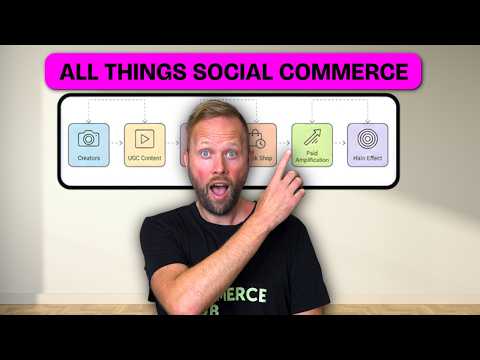
Key AI Technologies Powering Social Commerce
Several core AI technologies work together behind the scenes to make social commerce intelligent and responsive. Understanding these components helps you appreciate what is possible and where to invest your resources.

- Computer Vision and Visual Search: AI can identify products within images and videos, enabling features like shoppable posts, visual search by screenshot, and AR try-on experiences. Platforms like Snapchat and Pinterest already use visual AI to let users find and buy items they see in photos.
- Natural Language Processing (NLP): NLP enables chatbots, voice assistants, and sentiment analysis tools to understand and respond to customer queries conversationally. This is the backbone of AI-driven customer support on social channels.
- Recommendation Engines: Collaborative filtering and deep learning models analyze massive datasets to suggest products tailored to individual users. These engines are why you see products on TikTok that seem eerily aligned with your recent interests.
- Predictive Analytics: By analyzing historical purchase data, engagement metrics, and seasonal trends, predictive AI helps brands forecast demand, manage inventory, and allocate ad spend more efficiently.
- Generative AI: Tools like AI-generated product descriptions, influencer-style content creation, and dynamic ad creative are rapidly becoming standard in social commerce workflows.
Benefits of AI Social Commerce for Brands and Creators
The advantages of integrating AI into social commerce extend well beyond simple automation. Here are the most impactful benefits that businesses and content creators can leverage:
- Hyper-Personalization at Scale: AI delivers individualized product recommendations to millions of users simultaneously, something impossible with manual curation. This dramatically increases conversion rates and average order value.
- Improved Customer Experience: Chatbots and virtual assistants provide instant, 24/7 support, reducing friction and building trust. Shoppers who get immediate answers are far more likely to complete a purchase.
- Higher Engagement and Retention: AI-powered content suggestions keep feeds fresh and relevant, encouraging users to spend more time on the platform and return more frequently.
- Smarter Ad Spend: Machine learning models optimize targeting, bidding, and creative selection in real time, ensuring every dollar of ad budget works harder toward measurable outcomes.
- Faster Time-to-Market: Generative AI tools allow brands to produce social content, product copy, and ad variations at a fraction of the time and cost compared to traditional workflows.
- Data-Driven Decision Making: AI transforms raw social data into actionable insights, helping brands understand what resonates, what converts, and what to optimize next.
AI Social Commerce vs Traditional Social Commerce
Understanding the difference between AI-powered social commerce and its traditional counterpart highlights why more brands are making the shift. Below is a comparison that clarifies the key distinctions:
| Feature | Traditional Social Commerce | AI Social Commerce |
| Product Discovery | Manual browsing, hashtag searches, curated feeds | Algorithm-driven personalized recommendations in real time |
| Customer Support | Human agents, delayed response times | AI chatbots with instant, 24/7 responses and escalation |
| Content Creation | Manual planning, scripting, and production | Generative AI tools for rapid, scalable content production |
| Ad Targeting | Broad audience segments and static targeting | Dynamic, behavior-based targeting with continuous optimization |
| Conversion Optimization | A/B testing with human analysis | Predictive analytics and automated real-time adjustments |
| Inventory Management | Manual tracking and periodic reviews | AI-powered demand forecasting and automated replenishment |
| Scalability | Limited by human resources | Scales seamlessly across millions of users and touchpoints |
Practical Strategies to Implement AI Social Commerce
If you are ready to integrate AI into your social commerce strategy, these actionable steps will help you get started and scale effectively.
Step 1: Audit Your Current Social Commerce Funnel
Before implementing any AI tool, map out your existing customer journey on social platforms. Identify where drop-offs occur, which content formats drive the most engagement, and where manual processes create bottlenecks. This audit gives you a clear baseline and highlights the highest-impact areas for AI intervention.
Step 2: Start with AI-Powered Recommendation Engines
Recommendation engines are the most accessible entry point for AI social commerce. Platforms like Shopify, Meta, and TikTok already embed AI recommendations natively. Start by optimizing your product catalog with rich metadata, high-quality images, and detailed descriptions so the AI can match your products to the right audiences more effectively.
Step 3: Deploy Conversational AI for Customer Engagement
Implement AI chatbots on your social storefront and messaging channels. Modern conversational AI tools can handle product inquiries, process orders, track shipments, and even recover abandoned carts. Look for platforms that integrate directly with your social commerce tools to maintain a unified customer experience.
Step 4: Leverage Visual AI for Shoppable Content
Use computer vision tools to tag products within images and videos automatically. This enables features like visual search, shoppable video content, and AR try-on experiences. Brands in fashion, beauty, and home décor see particularly strong returns from visual AI integration.
Step 5: Scale with Generative AI for Content Production
Integrate generative AI tools into your content workflow to produce social posts, product descriptions, ad copy, and video scripts at scale. The key is using AI as a co-pilot rather than a replacement—human oversight ensures brand voice consistency and quality control.
Expert Tip: Focus on Data Quality
AI is only as good as the data it learns from. Invest in clean, structured product data, accurate customer profiles, and consistent tracking across social and e-commerce platforms. The better your data foundation, the more effective your AI-driven social commerce efforts will be over time.
The Future of AI Social Commerce
The trajectory of AI social commerce points toward even deeper integration between social platforms, artificial intelligence, and retail. Several emerging trends are worth watching closely. First, multimodal AI—which combines text, image, video, and audio understanding—will make social commerce experiences even more immersive and intuitive. Imagine a shopper uploading a short video of a room in their home and receiving real-time furniture recommendations that link directly to purchase options.
Second, generative AI is moving beyond content creation into interactive shopping experiences. AI-powered virtual shopping assistants will soon guide users through personalized browsing sessions, answering complex questions and curating complete outfits or home setups in real time. Third, social commerce platforms are expected to integrate AI-driven live shopping events, where algorithms match products to viewers based on their reactions and engagement during a broadcast. Finally, privacy-preserving AI techniques, such as federated learning, will become increasingly important as consumers demand more transparency and control over their data. Brands that embrace these developments early will establish significant competitive advantages in the rapidly evolving AI social commerce landscape.

Frequently Asked Questions
AI improves social commerce conversion rates by delivering hyper-personalized product recommendations in real time, optimizing ad targeting and bidding automatically, powering instant customer support through chatbots, and reducing friction in the checkout process. These capabilities work together to create a seamless shopping experience that aligns with each individual user’s preferences and purchase intent.
Leading AI tools for social commerce in 2024 include Shopify’s AI-powered product recommendations, Meta’s Advantage+ shopping campaigns for automated ad optimization, TikTok’s AI Creative Center for generating high-performing ad creatives, and conversational AI platforms like Tidio and Gorgias for social customer service. Generative AI tools such as Jasper and Copy.ai also help brands produce scalable social commerce content.
Absolutely. Many AI social commerce tools are designed with accessibility and affordability in mind, making them viable for small businesses. Platforms like Instagram Shop and TikTok Shop offer native AI-driven features at no additional cost, and affordable chatbot and recommendation tools can be integrated with minimal technical expertise. The key is starting small, focusing on one or two high-impact use cases, and scaling as results come in.
While both leverage social platforms for selling, AI social commerce uses machine learning and automation to personalize, optimize, and streamline the entire shopping experience, whereas live shopping focuses on real-time video broadcasts where hosts showcase and sell products directly to viewers. The most effective strategies combine both approaches, using AI to enhance live shopping events with real-time audience analytics, automated product tagging, and personalized follow-up recommendations.
AI algorithms analyze a combination of signals including user browsing behavior, engagement history, purchase patterns, demographic data, and real-time context to decide which products to recommend. Collaborative filtering identifies similar users and suggests what they purchased, while content-based filtering matches product attributes to individual preferences. Deep learning models continuously refine these predictions, making recommendations more accurate and relevant over time.
Reputable AI social commerce platforms prioritize security and comply with data privacy regulations such as GDPR and CCPA. However, brands should carefully vet any AI tool for data handling practices, encryption standards, and compliance certifications. Transparency with customers about how their data is used is critical for building trust and maintaining long-term engagement in AI-powered social commerce environments.
Final Thoughts
AI social commerce is not a distant future concept—it is happening right now, and it is fundamentally changing how brands sell and consumers buy on social platforms. From intelligent product discovery and automated customer service to generative content creation and predictive analytics, AI unlocks capabilities that were unimaginable just a few years ago. The brands and creators who embrace these technologies early, invest in quality data, and focus on genuine customer value will be the ones who thrive in this rapidly evolving landscape. Start with the strategies outlined in this guide, measure your results rigorously, and iterate continuously. The future of social commerce is intelligent, and it belongs to those who are ready to harness it.